Implementing an enterprise CRM across global teams isn’t just about technology—it’s a strategic transformation. When done right, it unifies sales, marketing, and customer service across continents. But without a clear roadmap, it can lead to chaos, resistance, and wasted resources. Here’s how to get it right the first time.





1. Understand the Core Challenges of Global CRM Implementation

Before diving into deployment, it’s critical to recognize the unique hurdles that come with rolling out a CRM system across international teams. These challenges aren’t just technical—they’re cultural, operational, and structural. Ignoring them can derail even the most advanced CRM platforms.
1.1. Cultural and Language Barriers
Global teams operate in diverse cultural contexts, which influence communication styles, work ethics, and technology adoption. For example, direct feedback may be welcomed in the U.S., but considered rude in Japan. Language differences can also lead to misinterpretations of CRM data, workflows, or training materials.
- Local dialects and idioms can affect the clarity of automated CRM messages.
- Different time zones complicate real-time collaboration and training sessions.
- Work-life balance expectations vary—what’s a standard 9-to-5 in Germany might be a 7-to-3 in India.
“Culture is more often a source of conflict than of synergy. Cultural differences are a nuisance at best and often a disaster.” — Geert Hofstede, cultural anthropologist
1.2. Data Privacy and Compliance Regulations
Each country has its own data protection laws. The EU’s GDPR, California’s CCPA, Brazil’s LGPD, and China’s PIPL all impose strict rules on how customer data is collected, stored, and processed. A CRM system that complies in one region may violate laws in another.
- GDPR requires explicit consent for data processing and the right to be forgotten.
- CCPA grants consumers the right to know what data is being collected and to opt out of its sale.
- Some countries mandate data localization—requiring customer data to be stored within national borders.
Failure to comply can result in fines up to 4% of global revenue or $7.5 million per violation under GDPR. To ensure compliance, enterprises must configure CRM settings regionally and conduct regular audits. Resources like the GDPR Information Portal provide up-to-date legal guidance.
1.3. Technological Infrastructure Disparities
Not all global offices have the same internet bandwidth, hardware capabilities, or IT support. A high-performance CRM that runs smoothly in New York might lag in Nairobi due to slower connectivity. This can lead to user frustration and low adoption rates.
- Legacy systems in some regions may not integrate well with modern CRM platforms.
- Mobile access is critical in regions where desktop usage is low.
- Power outages or network instability in emerging markets can disrupt CRM access.
Conduct a technology readiness assessment before rollout. Use cloud-based CRMs with offline capabilities, like Salesforce, which syncs data once connectivity is restored.
2. How to Implement Enterprise CRM Across Global Teams: Build a Unified Vision and Strategy
A successful global CRM rollout starts with a clear, shared vision. Without alignment at the executive level, regional teams may resist or misinterpret the initiative. The goal isn’t just to install software—it’s to transform how the organization engages with customers worldwide.
2.1. Define Clear Objectives and KPIs
Start by answering: Why are we implementing this CRM? Is it to improve customer retention, shorten sales cycles, or enhance cross-selling? Define measurable goals that apply globally but can be adapted locally.
- Reduce lead response time by 30% across all regions.
- Increase customer satisfaction (CSAT) scores by 15% within 12 months.
- Improve data accuracy by eliminating duplicate entries by 50%.
Use SMART goals (Specific, Measurable, Achievable, Relevant, Time-bound) to track progress. Tools like HubSpot offer built-in analytics to monitor these KPIs in real time.
2.2. Establish a Global CRM Governance Team
Create a cross-functional team with representatives from each major region. This team should include IT, sales, marketing, customer service, and compliance officers. Their role is to oversee implementation, resolve conflicts, and ensure consistency.
- Appoint a Global CRM Director to lead the initiative.
- Include regional CRM champions who act as local advocates and trainers.
- Hold monthly virtual meetings to review progress and address concerns.
This governance model ensures that decisions are inclusive and reflect on-the-ground realities. It also prevents top-down mandates that ignore regional nuances.
2.3. Align CRM Strategy with Business Goals
The CRM should support, not dictate, business strategy. For example, if the company is expanding into Asia, the CRM must support local payment methods, languages, and customer behavior patterns.
- Map CRM features to specific business outcomes (e.g., lead scoring for faster conversions).
- Ensure the CRM integrates with existing ERP, marketing automation, and support systems.
- Use CRM data to inform global product development and localization efforts.
According to a Gartner study, organizations that align CRM strategy with business goals see 2.5x higher user adoption rates.
3. How to Implement Enterprise CRM Across Global Teams: Choose the Right CRM Platform
Not all CRMs are built for global scale. The right platform must be flexible, scalable, and capable of handling multi-language, multi-currency, and multi-region operations. This decision will shape the success of your entire implementation.
3.1. Evaluate Key Features for Global Operations
Look for CRM systems that offer:
- Multi-language interface and localization support.
- Multi-currency and tax calculation capabilities.
- Time zone-aware scheduling and reporting.
- Role-based access control for regional data security.
- Global data center availability for low-latency access.
Platforms like Microsoft Dynamics 365 and Zoho CRM offer robust global features, including AI-driven insights and compliance tools.
3.2. Assess Integration and Scalability
Your CRM must integrate seamlessly with existing systems—ERP, email, telephony, marketing tools, and customer support platforms. Use APIs and middleware like MuleSoft or Zapier to connect disparate systems.
- Ensure the CRM can scale to support thousands of users across regions.
- Test integration performance under high load.
- Verify that third-party apps comply with regional data laws.
Scalability isn’t just about user count—it’s about data volume, transaction speed, and system reliability during peak hours in different time zones.
3.3. Compare Top Enterprise CRM Solutions
Here’s a quick comparison of leading platforms:
- Salesforce: Industry leader with extensive global support, AI (Einstein), and AppExchange ecosystem.
- Microsoft Dynamics 365: Strong integration with Office 365 and Azure, ideal for Microsoft-centric organizations.
- Oracle CX: Best for large enterprises with complex customer journeys and legacy Oracle systems.
- SAP Customer Experience: Deep integration with SAP ERP, suitable for manufacturing and logistics firms.
- HubSpot CRM: User-friendly and cost-effective for mid-sized companies expanding globally.
Conduct proof-of-concept trials in two or three regions before full rollout. Use feedback to refine your choice.
4. How to Implement Enterprise CRM Across Global Teams: Design a Phased Rollout Plan
Going global overnight is risky. A phased rollout allows you to test, learn, and adapt. It reduces disruption and builds momentum through early wins.
4.1. Start with a Pilot Program
Select one or two regions with strong IT support and leadership buy-in. These become your test labs. Measure adoption, performance, and user feedback.
- Choose regions with similar business models to ensure transferability.
- Limited scope: focus on one department (e.g., sales) first.
- Collect qualitative and quantitative data to refine the rollout strategy.
A pilot in Germany and Australia, for example, can reveal how European data laws and APAC work rhythms affect CRM usage.
4.2. Expand Region by Region with Local Customization
After the pilot, expand to other regions—but don’t apply a one-size-fits-all approach. Customize workflows, dashboards, and terminology to fit local needs.
- Adapt lead qualification criteria to regional market behaviors.
- Translate CRM labels and reports into local languages.
- Adjust notification settings based on working hours and communication preferences.
For instance, a “hot lead” in the U.S. might require a call within 15 minutes, while in Sweden, an email within 24 hours is acceptable.
4.3. Monitor and Optimize Each Phase
Use real-time analytics to track adoption, data quality, and system performance. Set up alerts for anomalies like login failures or data sync errors.
- Conduct weekly check-ins with regional CRM champions.
- Use Net Promoter Score (NPS) surveys to gauge user satisfaction.
- Adjust training, support, and configurations based on feedback.
Continuous optimization ensures that each phase builds on the last, creating a self-improving implementation process.
5. How to Implement Enterprise CRM Across Global Teams: Ensure Data Consistency and Quality
A CRM is only as good as its data. Inconsistent, duplicate, or outdated records undermine trust and decision-making. Global teams must follow standardized data practices to maintain integrity.
5.1. Establish Global Data Standards
Create a global data dictionary that defines field names, formats, and validation rules. For example:
- Phone numbers: Use E.164 format (+1-555-123-4567).
- Dates: Use ISO 8601 (YYYY-MM-DD) to avoid confusion between MM/DD/YYYY and DD/MM/YYYY.
- Lead sources: Standardize categories like “Webinar,” “Trade Show,” or “Referral.”
Enforce these standards through CRM validation rules and mandatory fields.
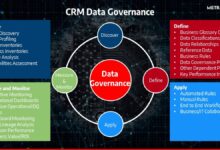
5.2. Implement Data Governance Policies
Assign data stewards in each region to oversee data quality. They should audit records, resolve duplicates, and train teams on best practices.
- Conduct quarterly data health checks.
- Use deduplication tools like SugarCRM’s Data Cleansing or Informatica.
- Define ownership: Who creates, edits, and deletes records?
According to IBM, poor data quality costs businesses $3.1 trillion annually in the U.S. alone.
5.3. Automate Data Entry and Synchronization
Manual data entry is error-prone and time-consuming. Use automation to reduce human error and improve efficiency.
- Integrate CRM with email to auto-capture contacts and activities.
- Use web forms with validation to ensure clean lead intake.
- Synchronize CRM with marketing platforms to track campaign performance.
Tools like Automate or Workato enable no-code automation across global systems.
6. How to Implement Enterprise CRM Across Global Teams: Train and Support Global Users
Even the best CRM fails if users don’t know how to use it. Training must be accessible, relevant, and ongoing—especially for teams in different time zones and languages.
6.1. Develop Multilingual Training Materials
Create video tutorials, user guides, and FAQs in the primary languages of your teams. Use subtitles and voiceovers for clarity.
- Translate CRM interface labels and help content.
- Use visual aids like infographics and flowcharts.
- Host live training sessions with interpreters if needed.
Platforms like Articulate 360 support multilingual e-learning development.
6.2. Offer Role-Based Training Programs
Not everyone uses the CRM the same way. Sales reps need lead management training; support agents need case tracking; marketers need campaign analytics.
- Customize training paths for each role.
- Include real-world scenarios from different regions.
- Use gamification to boost engagement and retention.
For example, a sales training module in Brazil might focus on Carnival season promotions, while one in Germany emphasizes year-end procurement cycles.
6.3. Provide 24/7 Support and Feedback Channels
Global teams work around the clock. Support must be available when users need it.
- Set up a global helpdesk with multilingual agents.
- Use AI chatbots for instant answers to common questions.
- Create a community forum where users can share tips and solutions.
Regularly collect feedback through surveys and use it to improve training and system usability.
7. Measure Success and Drive Continuous Improvement
Implementation doesn’t end at go-live. True success is measured by sustained adoption, improved performance, and evolving with business needs.
7.1. Track Global Adoption and Usage Metrics
Monitor who is logging in, how often, and which features they use. Low adoption in a region signals a need for intervention.
- Measure login frequency, record updates, and report generation.
- Compare regional usage patterns to identify gaps.
- Recognize and reward high-performing teams.
Use CRM dashboards to visualize adoption trends in real time.
7.2. Analyze Business Impact Across Regions
Did the CRM improve sales conversion? Reduce customer churn? Shorten response times? Analyze these outcomes by region to assess ROI.
- Compare pre- and post-CRM performance metrics.
- Conduct customer interviews to gauge service improvements.
- Use A/B testing to evaluate new CRM features.
According to Nucleus Research, CRM delivers an average $8.71 return for every dollar spent.
7.3. Foster a Culture of Continuous Feedback and Innovation
Encourage users to suggest improvements. Create a global CRM innovation council to review ideas and pilot new features.
- Host quarterly “CRM hackathons” to solve regional challenges.
- Integrate user feedback into roadmap planning.
- Stay updated on CRM trends like AI, predictive analytics, and voice integration.
Continuous improvement turns the CRM from a static tool into a dynamic engine for global growth.
How do you ensure data privacy when implementing CRM across multiple countries?
To ensure data privacy, configure your CRM to comply with local regulations like GDPR, CCPA, or PIPL. Use role-based access controls, data encryption, and regional data storage. Conduct regular compliance audits and train employees on data handling protocols.
What are the best practices for training global CRM users?
Best practices include creating multilingual training materials, offering role-based programs, and providing 24/7 support. Use videos, simulations, and gamification to enhance engagement. Assign regional CRM champions to lead local training sessions.
How long does it take to implement an enterprise CRM globally?
Timeline varies by organization size and complexity, but typically ranges from 6 to 18 months. A phased approach—starting with a pilot—helps manage risk and allows for adjustments before full rollout.
Which CRM platforms are best for global enterprises?
Top platforms include Salesforce, Microsoft Dynamics 365, Oracle CX, SAP Customer Experience, and HubSpot CRM. The best choice depends on integration needs, budget, and regional requirements.
How can you measure the success of a global CRM implementation?
Success is measured through KPIs like user adoption rates, data accuracy, sales conversion improvements, customer satisfaction scores, and ROI. Regular reporting and feedback loops are essential for ongoing evaluation.
Implementing an enterprise CRM across global teams is a complex but rewarding journey. By understanding cultural and technical challenges, building a unified strategy, choosing the right platform, and supporting users effectively, organizations can create a seamless, data-driven customer experience worldwide. The key is not just deployment—but sustained engagement, continuous improvement, and alignment with global business goals. When done right, a global CRM becomes the central nervous system of your enterprise, connecting teams, customers, and insights across borders.
Further Reading:
