Navigating CRM system pricing can feel like decoding a secret language. With so many options, hidden fees, and confusing tiers, it’s easy to overspend—or underinvest. Let’s break down the real costs and value behind CRM pricing models.


CRM System Pricing: Understanding the Basics

Customer Relationship Management (CRM) systems are essential tools for businesses aiming to streamline sales, marketing, and customer service. However, before diving into features and integrations, understanding CRM system pricing is crucial. The cost can vary dramatically based on company size, industry, and specific needs. From free plans to enterprise-level solutions costing thousands per month, the range is vast.
What Is CRM System Pricing?
CRM system pricing refers to the cost structure associated with acquiring and maintaining a CRM platform. This includes subscription fees, setup costs, training, customization, and ongoing support. Unlike one-time software purchases, most modern CRMs operate on a Software-as-a-Service (SaaS) model, meaning businesses pay a recurring fee—usually monthly or annually—based on users, features, or usage levels.
- Subscription-based models dominate the CRM market.
- Pricing often scales with the number of users.
- Additional costs may include onboarding, data migration, and premium support.
According to Gartner’s 2023 Market Guide for Sales CRM, over 70% of mid-sized companies now use cloud-based CRM solutions, making subscription pricing the norm.
Why CRM Pricing Matters for Your Business
Choosing the right CRM isn’t just about features—it’s about value. A poorly chosen system can lead to wasted budgets, low user adoption, and operational inefficiencies. Conversely, a well-priced CRM that aligns with your business goals can boost productivity, improve customer retention, and increase revenue.
“The best CRM isn’t the cheapest or the most expensive—it’s the one that delivers the highest ROI for your specific use case.” — TechRadar CRM Analyst, 2024
For startups, overpaying for unused features can drain limited capital. For enterprises, underestimating scalability needs can result in costly migrations later. That’s why understanding CRM system pricing from the outset is a strategic imperative.
Types of CRM Pricing Models
Not all CRM systems charge the same way. Different vendors use different pricing strategies, and knowing these models helps you compare apples to apples. The most common include per-user, tiered, flat-rate, and usage-based pricing.
Per-User Pricing
This is the most widespread CRM system pricing model. You pay a set fee for each user (or seat) accessing the platform. For example, a vendor might charge $50 per user per month. If you have 10 sales reps, that’s $500/month.
- Pros: Predictable costs, easy to scale up or down.
- Cons: Can become expensive for large teams; may discourage adoption if users feel monitored.
Vendors like Salesforce and Zoho CRM use this model extensively. Salesforce’s Sales Cloud starts at $25/user/month, while Zoho offers a free tier and paid plans from $14/user/month.
Tiered Pricing
Tiered pricing bundles features into packages (e.g., Basic, Professional, Enterprise). Each tier has a higher price and more capabilities. This model helps businesses choose based on functionality rather than just headcount.
- Basic Tier: Core CRM features like contact management and task tracking.
- Professional Tier: Adds automation, email integration, and reporting.
- Enterprise Tier: Includes advanced analytics, API access, and custom workflows.
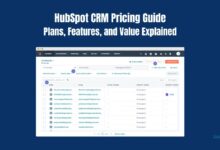
HubSpot, for instance, offers a free CRM and paid tiers starting at $45/month for the Starter plan, scaling up to $1,200/month for the Enterprise plan. This flexibility makes tiered pricing ideal for growing businesses.
Flat-Rate and Usage-Based Models
Some vendors offer flat-rate pricing, where you pay a single fee regardless of user count—ideal for small teams. Others use usage-based pricing, charging based on actions like emails sent, contacts stored, or API calls made.
- Flat-rate: Simplifies budgeting; common in small business CRMs.
- Usage-based: Can be cost-effective for low-volume users but unpredictable at scale.
Insightly, for example, offers a flat-rate plan at $29/month for up to 2 users, while Pipedrive uses per-user pricing but includes generous usage limits. Meanwhile, platforms like Freshsales offer usage-based elements within tiered structures, blending models for flexibility.
Key Factors That Influence CRM System Pricing
CRM system pricing isn’t arbitrary. Several factors determine how much you’ll pay. Understanding these helps you anticipate costs and negotiate better deals.
Number of Users and Team Size
This is the most direct cost driver. Most SaaS CRMs scale pricing linearly with user count. A team of 5 might pay $250/month, while a team of 50 could pay $2,500 for the same plan.
- Small businesses (1–10 users): Often qualify for discounts or free tiers.
- Mid-market (11–100 users): Typically see volume discounts at 20–30 users.
- Enterprises (100+ users): May negotiate custom contracts with bundled services.
Some vendors, like Agile CRM, offer flat pricing for unlimited users on higher tiers, which can be a game-changer for scaling teams.
Feature Set and Functionality
More advanced features mean higher prices. Basic contact management is cheaper than AI-powered lead scoring or omnichannel customer service.
- Core Features: Contact & deal tracking, task management – usually in lower tiers.
- Advanced Features: Workflow automation, forecasting, custom reporting – found in mid to high tiers.
- Premium Features: AI insights, telephony integration, multi-channel support – enterprise-level only.
For example, HubSpot’s free CRM includes contact management, but its $45/month Starter plan adds email tracking and meeting scheduling. The $1,200/month Enterprise plan includes custom behavioral tracking and advanced permissions.
Deployment Type: Cloud vs. On-Premise
Cloud-based CRMs dominate today, but some industries still use on-premise solutions. The deployment type significantly impacts CRM system pricing.
- Cloud CRM: Lower upfront cost, subscription-based, includes hosting and updates.
- On-Premise CRM: High initial investment (software license, servers, IT staff), but potentially lower long-term costs for large organizations.
Microsoft Dynamics 365 offers both models. Its cloud version starts at $65/user/month, while on-premise licensing can cost $1,350 per user upfront, plus annual maintenance fees. Cloud is generally more accessible, but on-premise offers greater control and data sovereignty—critical for regulated industries.
Hidden Costs in CRM System Pricing
The listed price is rarely the full story. Many businesses underestimate total CRM costs because they overlook hidden fees that can add 20–50% to the budget.
Implementation and Onboarding Fees
Setting up a CRM isn’t plug-and-play. You may need data migration, user training, and workflow configuration. Vendors often charge separately for these services.
- Basic onboarding: $500–$2,000 (self-guided or vendor-supported).
- Full implementation: $5,000–$50,000+ for enterprise deployments.
- Third-party consultants: Can cost $150–$300/hour.
Salesforce, for example, offers Trailhead for free training, but complex implementations often require certified partners. A 2023 Nucleus Research report found that companies spend an average of 1.5x the annual license fee on implementation alone.
Customization and Integration Costs
Most businesses need their CRM to connect with existing tools like email, calendars, ERP systems, or e-commerce platforms. While basic integrations may be free, complex ones require development work.
- Pre-built integrations: Often included (e.g., Gmail, Outlook).
- Custom API integrations: Can cost $5,000–$20,000 depending on complexity.
- Custom fields, workflows, or dashboards: May require developer hours or premium support.
For instance, integrating Salesforce with SAP or NetSuite often requires middleware like MuleSoft, which adds $10,000+ annually. Similarly, Zoho CRM’s free plan lacks API access, pushing users to paid tiers for customization.
Ongoing Support and Maintenance
After go-live, you’ll need ongoing support. While basic help is included, premium support with faster response times or dedicated account managers comes at a cost.
- Standard support: Email/ticket-based, 24–48 hour response.
- Premium support: Phone/chat, SLAs, 4-hour response—adds 15–25% to annual cost.
- Upgrades and patches: Usually included in SaaS, but on-premise systems need IT staff.
Oracle CRM, for example, charges an annual maintenance fee of 22% of the license cost for updates and support. For a $100,000 license, that’s $22,000/year—forever.
Top CRM Platforms and Their Pricing Breakdown
To make informed decisions, let’s compare leading CRM platforms and their CRM system pricing structures. This comparison includes entry-level costs, scalability, and value for money.
Salesforce: The Enterprise Leader
Salesforce is the world’s most popular CRM, known for its depth and scalability. However, it’s also one of the most expensive.
- Sales Cloud Essentials: $25/user/month (basic sales automation).
- Sales Cloud Professional: $75/user/month (full sales cycle management).
- Sales Cloud Enterprise: $150/user/month (customization, API access).
- Unlimited & Custom: $300+/user/month (advanced features, 24/7 support).
Additional costs: Marketing Cloud ($400+/month), Service Cloud ($25+/user), and Pardot for marketing automation ($1,250+/month). Implementation can exceed $50,000 for mid-sized firms. Despite the cost, Salesforce delivers unmatched scalability and ecosystem integration.
HubSpot: Best for SMBs and Marketing
HubSpot offers a freemium model that’s highly attractive to small and medium businesses. Its CRM system pricing is transparent and user-friendly.
- Free CRM: Unlimited users, basic contact & deal tracking.
- Starter: $45/month (up to 1M contacts, email tracking).
- Professional: $450/month (marketing automation, reporting).
- Enterprise: $1,200/month (advanced workflows, custom objects).
HubSpot’s strength lies in its all-in-one platform—CRM, marketing, sales, and service hubs. While per-contact limits apply in higher tiers, the free CRM makes it easy to start small and scale. Implementation is simpler than Salesforce, often under $5,000.
Zoho CRM: The Budget-Friendly Powerhouse
Zoho CRM is a favorite among cost-conscious businesses. It offers robust features at a fraction of competitors’ prices.
- Free Edition: Up to 3 users, basic CRM features.
- Standard: $14/user/month (sales automation, email integration).
- Professional: $23/user/month (workflow automation, custom functions).
- Enterprise: $40/user/month (advanced customization, audit trails).
Zoho also offers a $50/user/month Ultimate plan with AI and phone integration. What sets Zoho apart is its ecosystem—Zoho One bundles 40+ apps (CRM, email, finance) for $37/user/month, offering incredible value for integrated operations.
How to Choose the Right CRM Based on Pricing
Selecting a CRM isn’t just about the lowest price—it’s about long-term value. Here’s how to align CRM system pricing with your business goals.
Assess Your Business Size and Needs
Startups should prioritize affordability and ease of use. A free or low-cost CRM like HubSpot or Zoho Free Edition is ideal. As you grow, look for platforms that scale without requiring a full migration.
- 1–10 users: Focus on essential features, low entry cost.
- 11–50 users: Consider automation, reporting, and integrations.
- 50+ users: Prioritize scalability, security, and admin controls.
A 2024 Forrester study found that Zoho CRM delivered a 207% ROI over three years for mid-sized firms, largely due to low total cost of ownership.
Calculate Total Cost of Ownership (TCO)
Don’t just look at the monthly subscription. Calculate the full TCO over 3–5 years, including:
- Subscription fees (multiplied by users and years).
- Implementation and training.
- Customization and integration.
- Support and upgrades.
- Opportunity cost of low user adoption.
For example, a $50/user/month CRM with 20 users costs $12,000/year in subscriptions. Add $10,000 for setup and $3,000/year for support, and your first-year TCO is $25,000—not $12,000.
Negotiate and Leverage Discounts
CRM pricing is rarely fixed. Most vendors offer discounts for annual payments, non-profits, or long-term contracts.
- Pay annually: Save 10–20% (e.g., HubSpot offers 10% off annual billing).
- Ask for non-profit or startup discounts: Salesforce offers 10–50% off for eligible organizations.
- Negotiate volume pricing: 50+ users? Request a custom quote.
Many companies don’t realize they can negotiate. A simple email asking, “What’s your best price for a 3-year contract with 30 users?” can unlock significant savings.
Future Trends in CRM System Pricing
The CRM landscape is evolving. New technologies and business models are reshaping how vendors price their solutions.
Rise of AI and Automation in Pricing
AI-powered CRMs are becoming standard. Features like predictive lead scoring, chatbots, and sentiment analysis are no longer premium add-ons—they’re core offerings. But they come at a cost.
- Vendors are creating “AI tiers” with higher pricing.
- Some charge per AI interaction (e.g., $0.01 per chatbot query).
- Others bundle AI into enterprise plans only.
Salesforce Einstein AI, for example, is included in Enterprise and Unlimited editions but costs extra in lower tiers. As AI becomes essential, expect pricing models to reflect its value—and cost.
Subscription Fatigue and the Push for Value
Businesses are tired of endless SaaS subscriptions. Vendors are responding with bundled suites and outcome-based pricing.
- All-in-one platforms (e.g., Zoho One, HubSpot Suite) reduce subscription sprawl.
- Some vendors offer pricing based on ROI, like charging a % of sales generated.
- Transparency is becoming a competitive advantage.
A 2023 McKinsey report noted that 68% of B2B buyers now prioritize vendors with clear, predictable pricing over feature-rich but opaque ones.
Open Source and Community-Driven CRM Models
While still niche, open-source CRMs like SuiteCRM and EspoCRM offer free or low-cost alternatives. These platforms charge for support, hosting, and customization—not the software itself.
- Zero license fees.
- Lower long-term costs for tech-savvy teams.
- High customization potential.
However, they require more IT resources. For non-technical teams, the hidden costs of maintenance can outweigh savings. Still, they represent a growing trend toward democratized CRM access.
What is the average cost of a CRM system?
The average cost of a CRM system ranges from $12 to $250 per user per month. Small businesses often pay $12–$50/user/month (e.g., Zoho, HubSpot), while enterprises using Salesforce or Microsoft Dynamics can pay $150+/user/month. Additional implementation and integration costs can double the total expense.
Is there a free CRM system that’s actually good?
Yes. HubSpot CRM and Zoho CRM offer robust free plans with no user limits (HubSpot) or up to 3 users (Zoho). These include contact management, deal tracking, email integration, and basic reporting—ideal for startups and small teams. While advanced features require upgrades, the free tiers are fully functional for core CRM needs.
How can I reduce CRM system pricing costs?
You can reduce CRM costs by: (1) choosing annual billing for discounts, (2) starting with a free or low-tier plan and scaling gradually, (3) bundling services (e.g., Zoho One), (4) negotiating volume pricing, and (5) avoiding over-customization. Also, calculate total cost of ownership to avoid hidden fees.
Which CRM offers the best value for money?
Zoho CRM and HubSpot are widely regarded as offering the best value. Zoho provides enterprise-grade features at budget prices, especially with Zoho One. HubSpot’s free CRM and transparent tiering make it ideal for growing businesses. For larger enterprises, Salesforce justifies its cost with unmatched scalability and ecosystem depth.
Do CRM prices include support and updates?
In cloud-based SaaS models, yes—support and updates are typically included in the subscription fee. However, premium support (e.g., 24/7 phone support, dedicated managers) often costs extra. For on-premise CRMs, updates and support are usually billed annually (e.g., 20–22% of license cost).
CRM system pricing is more than just a number—it’s a reflection of value, scalability, and long-term strategy. From understanding pricing models to avoiding hidden costs, the key is to look beyond the sticker price. Whether you’re a startup on a budget or an enterprise needing advanced capabilities, the right CRM should align with your goals, not just your wallet. By evaluating total cost of ownership, negotiating wisely, and staying informed about trends like AI and bundled suites, you can make a smart, sustainable investment. The most expensive CRM isn’t always the best—and the cheapest isn’t always the answer. It’s about finding the perfect balance of cost, features, and future readiness.
Further Reading:
