Imagine a world where your customer relationships are not just managed but predicted, personalized, and perfected—automatically. That’s the power of AI-Powered CRM Software today. It’s not science fiction; it’s the new standard for businesses aiming to stay ahead.



What Is AI-Powered CRM Software?

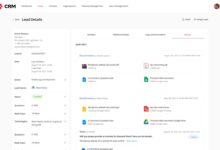
AI-Powered CRM Software combines traditional customer relationship management tools with artificial intelligence to automate, analyze, and enhance every customer interaction. Unlike legacy CRM systems that simply store data, AI-enhanced platforms interpret it, predict outcomes, and recommend actions in real time.
Definition and Core Components
At its core, AI-Powered CRM Software integrates machine learning, natural language processing (NLP), and predictive analytics into CRM workflows. These components allow the system to learn from data patterns, understand human language in emails or chats, and forecast customer behavior.
- Machine Learning: Enables the system to improve over time without explicit programming.
- Natural Language Processing: Helps interpret customer communications across channels.
- Predictive Analytics: Forecasts sales trends, customer churn, and lead conversion probabilities.
According to Salesforce, 85% of customer interactions will be managed without human agents by 2025, thanks to AI integration in CRM platforms (Salesforce Research).
Evolution from Traditional CRM to AI-Driven Systems
Traditional CRM systems were primarily databases—repositories for contact details, sales logs, and support tickets. While useful, they required manual input and offered limited insights. The shift began with cloud-based CRMs, which improved accessibility and collaboration.
Then came AI. Platforms like Zoho CRM and Microsoft Dynamics 365 started embedding AI assistants like Zia and Copilot, transforming static data into dynamic intelligence.
“AI is not replacing CRM; it’s redefining it.” — Gartner
Top 7 Benefits of AI-Powered CRM Software
The integration of AI into CRM isn’t just a trend—it’s a transformation. Companies leveraging AI-Powered CRM Software report higher customer satisfaction, faster sales cycles, and improved operational efficiency. Let’s explore the seven most impactful benefits.
1. Hyper-Personalized Customer Experiences
AI analyzes vast amounts of customer data—purchase history, browsing behavior, social media activity, and more—to deliver personalized content, product recommendations, and communication timing.
For example, an AI-powered CRM can suggest sending a discount offer to a customer who abandoned their cart, based on their past purchase frequency and average order value.
- Dynamic email content tailored to user preferences.
- Personalized product suggestions in real time.
- Behavior-triggered messaging (e.g., post-purchase follow-ups).
This level of personalization increases engagement and conversion rates. A study by McKinsey found that personalization can reduce acquisition costs by up to 50% and increase revenues by 5–15%.
2. Predictive Lead Scoring and Sales Forecasting
One of the most powerful features of AI-Powered CRM Software is predictive lead scoring. Instead of relying on manual tagging or gut feeling, AI evaluates hundreds of data points to determine which leads are most likely to convert.
Factors like website visits, email opens, social engagement, and job title are analyzed to assign a dynamic score that updates in real time.
- Reduces time spent on low-quality leads.
- Improves sales team productivity.
- Enhances accuracy of revenue forecasting.
HubSpot’s AI-powered lead scoring system, for instance, helps businesses prioritize high-intent prospects, resulting in a 30% increase in qualified leads (HubSpot).
3. Intelligent Automation of Routine Tasks
Sales and support teams waste hours on repetitive tasks like data entry, follow-up emails, and meeting scheduling. AI-Powered CRM Software automates these processes, freeing up time for strategic work.
AI can auto-log calls, transcribe voicemails, update deal stages, and even draft responses based on context.
- Automated data capture from emails and calls.
- Smart calendar syncing and meeting reminders.
- Auto-generated follow-up sequences.
According to a report by Nucleus Research, automation in CRM can deliver $8.71 for every $1 spent, thanks to increased productivity and reduced errors.
4. Enhanced Customer Service with AI Chatbots
AI chatbots integrated into CRM systems provide 24/7 customer support, answering common queries, escalating issues, and retrieving account information instantly.
These bots learn from every interaction, improving their responses over time. They also feed insights back into the CRM, enriching customer profiles.
- Instant resolution of FAQs (e.g., order status, return policies).
- Seamless handoff to human agents when needed.
- Consistent service across channels (web, mobile, social).
Zendesk’s AI-powered Answer Bot, for example, resolves up to 40% of customer inquiries without human intervention (Zendesk).
5. Real-Time Sentiment Analysis
Understanding how customers feel is crucial. AI-Powered CRM Software uses sentiment analysis to detect emotions in emails, chat transcripts, and social media mentions.
This allows companies to proactively address dissatisfaction before it escalates.
- Flags negative sentiment in customer messages.
- Triggers alerts for urgent follow-up.
- Tracks brand perception over time.
For instance, if a customer writes, “I’m extremely disappointed with your service,” the CRM can flag this as high-priority and suggest a personalized apology template.
6. Smarter Marketing Campaigns
AI enhances marketing efforts by identifying the best audience segments, optimal send times, and most effective content formats.
It can A/B test subject lines, predict click-through rates, and adjust campaigns in real time based on performance.
- Automated segmentation based on behavior and demographics.
- Predictive content optimization.
- Multi-channel campaign coordination.
Marketo’s AI-driven programs have helped brands like Adobe increase campaign engagement by 25% through intelligent targeting.
7. Proactive Churn Prevention
Losing customers is expensive. AI-Powered CRM Software identifies early warning signs of churn—like decreased login frequency, support ticket spikes, or payment delays.
It then recommends retention strategies, such as offering discounts, initiating check-in calls, or providing onboarding resources.
- Early detection of at-risk customers.
- Automated retention workflows.
- Churn risk scoring models.
Companies using AI for churn prediction report up to a 30% reduction in customer attrition, according to a study by PwC.
How AI-Powered CRM Software Works: Behind the Scenes
Understanding the mechanics of AI-Powered CRM Software demystifies its capabilities. It’s not magic—it’s data, algorithms, and continuous learning.
Data Ingestion and Integration
AI needs data to function. Modern CRM platforms pull information from multiple sources: email, social media, e-commerce platforms, call centers, and IoT devices.
Integration with tools like Slack, Shopify, and Google Analytics ensures a 360-degree view of the customer.
- APIs connect disparate systems.
- ETL (Extract, Transform, Load) processes clean and structure data.
- Real-time sync ensures up-to-date insights.
Without robust data integration, AI models would lack the context needed for accurate predictions.
Machine Learning Models in Action
Once data is collected, machine learning models analyze it to identify patterns. These models are trained on historical data and continuously refined with new inputs.
For example, a model might learn that customers who attend a webinar and download a pricing sheet have a 70% chance of converting within two weeks.
- Supervised learning: Uses labeled data to predict outcomes.
- Unsupervised learning: Discovers hidden patterns in data.
- Reinforcement learning: Improves decisions through trial and feedback.
These models power features like lead scoring, churn prediction, and next-best-action recommendations.
Natural Language Processing for Communication Insights
NLP allows AI to understand human language in unstructured formats—emails, chat logs, voice notes. It extracts intent, sentiment, and key topics.
In a sales context, NLP can summarize a long email thread into actionable insights: “Customer is interested in pricing but concerned about implementation time.”
- Intent recognition: Identifies what the customer wants.
- Sentiment detection: Gauges emotional tone.
- Entity extraction: Pulls out names, dates, and products mentioned.
Google’s Contact Center AI uses NLP to transcribe and analyze customer calls, providing real-time guidance to agents.
Leading AI-Powered CRM Software Platforms in 2024
Not all CRM systems are created equal. The best AI-Powered CRM Software platforms combine robust AI features with user-friendly interfaces and scalable architecture.
Salesforce Einstein AI
Salesforce remains the market leader, and its Einstein AI suite is a major reason why. Einstein automates data entry, predicts sales outcomes, and recommends next steps.
- Einstein Lead Scoring: Prioritizes high-conversion leads.
- Einstein Opportunity Insights: Flags risks in deals.
- Einstein Activity Capture: Logs emails and events automatically.
Salesforce reports that companies using Einstein see a 30% increase in sales productivity (Salesforce Einstein).
Microsoft Dynamics 365 with AI Copilot
Microsoft’s Dynamics 365 integrates AI through its Copilot feature, which uses the Microsoft Cloud and OpenAI’s technology to assist sales and service teams.
- Summarizes customer interactions.
- Drafts emails and responses.
- Generates insights from data.
It’s particularly strong for enterprises already using Microsoft 365, offering seamless integration with Outlook, Teams, and Excel.
HubSpot CRM with AI Tools
HubSpot has democratized AI for small and mid-sized businesses. Its AI features include email generation, meeting summaries, and content suggestions.
- AI Email Writer: Crafts personalized outreach messages.
- AI Meeting Notes: Transcribes and summarizes calls.
- AI Blog Writer: Generates SEO-friendly content.
HubSpot’s AI tools are designed to reduce friction, not replace humans—making them ideal for growing teams (HubSpot AI).
Zoho CRM with Zia
Zia, Zoho’s AI assistant, offers voice-based commands, predictive sales forecasting, and sentiment analysis. It’s highly customizable and cost-effective.
- Voice-assisted data entry.
- AI-powered workflow automation.
- Forecasting accuracy improvements.
Zoho claims Zia reduces manual data entry by 40%, allowing reps to focus on selling.
Challenges and Limitations of AI-Powered CRM Software
Despite its advantages, AI-Powered CRM Software is not without challenges. Organizations must navigate technical, ethical, and operational hurdles.
Data Privacy and Security Concerns
AI systems require vast amounts of personal data, raising concerns about privacy and compliance with regulations like GDPR and CCPA.
- Risk of data breaches.
- Need for transparent data usage policies.
- Customer consent management.
Companies must ensure encryption, access controls, and regular audits to maintain trust.
Implementation Complexity
Integrating AI into existing CRM systems can be complex, especially for legacy infrastructures.
- Data silos hinder AI performance.
- Employee resistance to change.
- Need for specialized IT support.
A phased rollout, employee training, and vendor support are critical for success.
Over-Reliance on Automation
While automation boosts efficiency, over-reliance can erode the human touch essential in customer relationships.
- Impersonal interactions if not balanced.
- Loss of empathy in service.
- AI errors leading to customer frustration.
The goal should be augmentation, not replacement—using AI to empower, not eliminate, human agents.
Future Trends in AI-Powered CRM Software
The evolution of AI-Powered CRM Software is accelerating. Emerging technologies are set to redefine customer engagement in the coming years.
Generative AI for Content Creation
Generative AI, powered by large language models (LLMs), is transforming how businesses create content. From drafting emails to generating reports, AI can produce human-like text in seconds.
- AI-generated sales proposals.
- Personalized marketing copy.
- Automated customer summaries.
Platforms like Salesforce and HubSpot are already embedding generative AI into their workflows.
Predictive Customer Journeys
Future CRM systems will map and predict entire customer journeys, anticipating needs before they arise.
- Proactive service interventions.
- Next-best-product recommendations.
- Life-stage-based marketing.
This shift from reactive to predictive engagement will deepen customer loyalty.
Emotion AI and Voice Analytics
Emotion AI, or affective computing, detects emotions through voice tone, facial expressions, and language patterns.
In CRM, this could mean detecting frustration in a customer’s voice during a call and alerting the agent to adjust their approach.
- Real-time emotional feedback.
- Improved agent training.
- Enhanced customer empathy.
Companies like Cogito are already using voice analytics to improve call center performance.
How to Choose the Right AI-Powered CRM Software
Selecting the right platform depends on your business size, industry, and goals. Here’s a step-by-step guide to making the best choice.
Assess Your Business Needs
Start by identifying your pain points. Do you need better lead scoring? Faster response times? Improved customer retention?
- Map current CRM workflows.
- Identify bottlenecks.
- Define success metrics.
This clarity will help you prioritize AI features that deliver real value.
Evaluate Integration Capabilities
The CRM must integrate seamlessly with your existing tech stack—email, marketing automation, ERP, and support tools.
- Check available APIs and pre-built connectors.
- Test data sync reliability.
- Ensure mobile and cloud compatibility.
Poor integration leads to data silos and reduced AI effectiveness.
Consider Scalability and Support
Choose a platform that grows with your business. Look for vendors offering robust customer support, training, and regular updates.
- Cloud-based solutions for flexibility.
- Dedicated AI support teams.
- Community forums and knowledge bases.
Scalability ensures long-term ROI and reduces the need for costly migrations.
What is AI-Powered CRM Software?
AI-Powered CRM Software integrates artificial intelligence into customer relationship management systems to automate tasks, analyze data, and deliver intelligent insights. It enhances sales, marketing, and customer service through predictive analytics, natural language processing, and machine learning.
How does AI improve customer service in CRM?
AI enhances customer service by powering chatbots, analyzing sentiment in communications, automating responses, and providing agents with real-time suggestions. This leads to faster resolution times and higher satisfaction rates.
Can small businesses benefit from AI-Powered CRM Software?
Absolutely. Platforms like HubSpot and Zoho offer affordable AI features tailored for small businesses, helping them compete with larger enterprises by improving efficiency and personalization.
Is AI in CRM replacing human jobs?
No, AI is not replacing humans but augmenting them. It handles repetitive tasks, allowing employees to focus on strategic, creative, and empathetic interactions that machines cannot replicate.
What are the risks of using AI in CRM?
Risks include data privacy violations, algorithmic bias, over-automation leading to impersonal service, and dependency on vendor platforms. Proper governance, transparency, and human oversight are essential to mitigate these risks.
The rise of AI-Powered CRM Software marks a pivotal shift in how businesses manage customer relationships. From hyper-personalization to predictive analytics, the benefits are transformative. While challenges exist, the right strategy and platform can unlock unprecedented efficiency and customer loyalty. The future of CRM isn’t just smart—it’s intelligent, proactive, and deeply human at its core.
Further Reading:
